01
Eggshell
Living rooms, dining rooms, bedrooms, hallways, and other broad walls where a soft low-lustre finish suits the surface.
Interior paint finish comparison
Eggshell is usually the calmer choice for broad walls. Semi-gloss reflects more light and is commonly used on trim, doors, cabinets, and approved high-moisture surfaces.
One free render. No signup or card required.
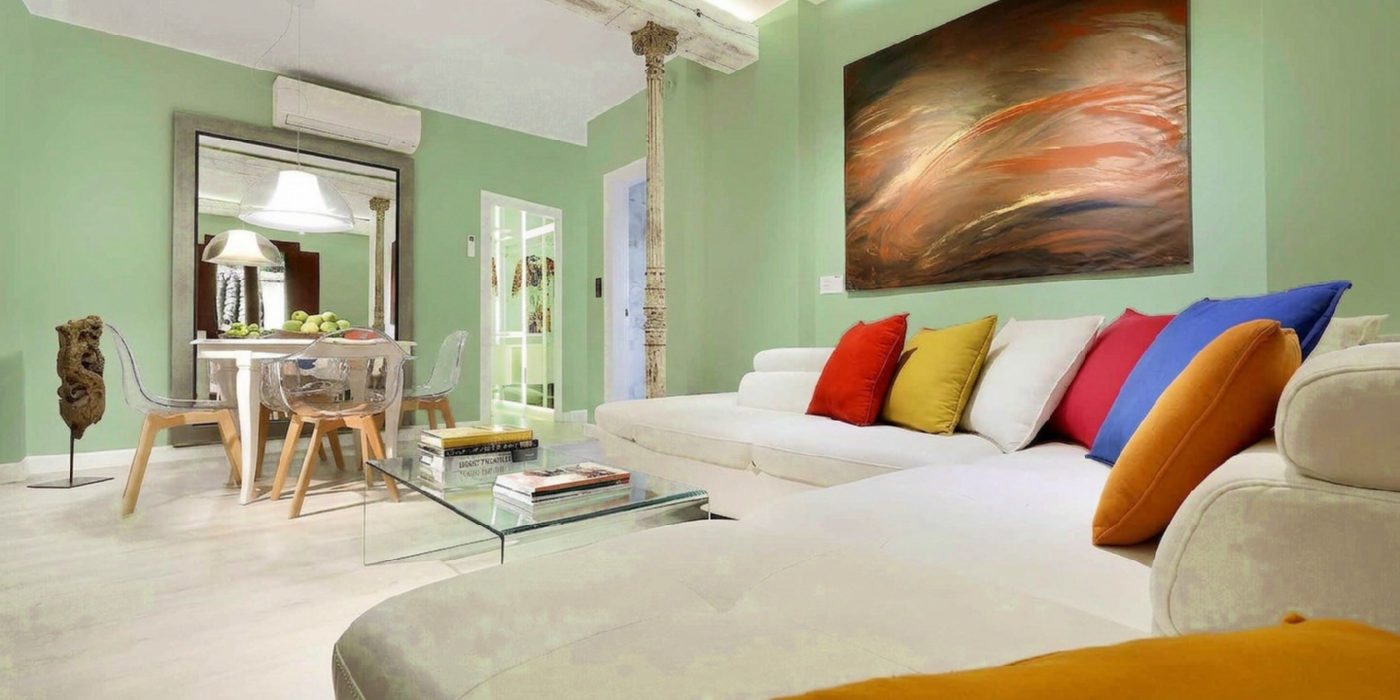
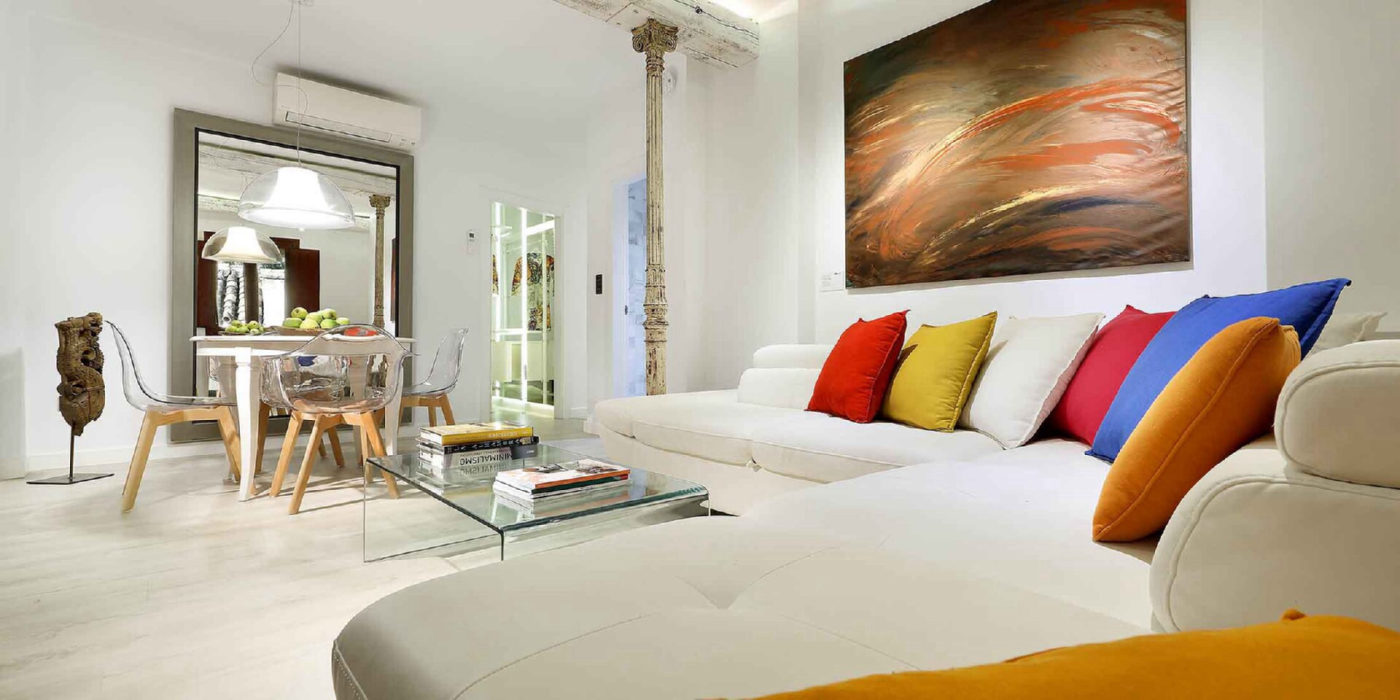
A real TestMyPaint render, measured against the requested colour code.
Choose eggshell for most living-space walls and semi-gloss for architectural details or verified harder-working surfaces. Let the exact product, wall condition, and a dried sample settle the choice.
The finish changes reflected light, visible wall texture, cleaning guidance, and which surfaces a coating can handle.
01
Living rooms, dining rooms, bedrooms, hallways, and other broad walls where a soft low-lustre finish suits the surface.
02
Trim, doors, cabinets, wainscotting, and manufacturer-approved high-touch or high-moisture surfaces where a harder-working finish is useful.
Facts checked 21 August 2026
Look and feel
Eggshell
Eggshell reflects less light than semi-gloss. It usually looks calmer across a large wall and draws less attention to dents, patches, and roller texture.
Semi-gloss
Semi-gloss creates brighter highlights and a more luminous finish. The extra reflection can define architectural details but expose wall flaws and application marks.
Where it works
Eggshell
Eggshell is widely offered in interior wall-paint ranges. Finish names and measured sheen vary, so compare the exact product rather than relying on the label alone.
Semi-gloss
Semi-gloss is common in interior trim and cabinet ranges as well as some wall-paint lines. Confirm that the chosen product is approved for the actual surface.
Cleaning
Eggshell
Many current eggshell wall paints are washable, but stain resistance, scrubbability, and moisture suitability belong to the exact coating.
Semi-gloss
Manufacturers commonly position semi-gloss for easier cleaning and moisture resistance. Verify the product's technical guidance before treating those as guarantees.
Application
Eggshell
Repair and prime as directed, keep a wet edge across broad walls, and follow the label for tools, spreading rate, dry time, and recoat time.
Semi-gloss
Preparation and even application are especially visible. Follow the label, use the specified primer, and apply the recommended number and thickness of coats.
Choose it when
Eggshell
Choose eggshell for broad walls when restrained reflection and a more forgiving appearance matter more than maximum lustre.
Semi-gloss
Choose semi-gloss when you want trim or doors to stand out, or when the exact coating's verified cleaning and moisture performance solves a real need.
Decision guide
Start with the surface, then compare reflection, wall condition, cleaning, moisture, and the exact product's instructions.
01
Eggshell and semi-gloss usually solve different jobs. Benjamin Moore places eggshell on high-traffic walls in living rooms, dining rooms, and bedrooms, while semi-gloss is commonly used on trim, doors, cabinets, and wainscotting. Sherwin-Williams also points to semi-gloss for kitchens, bathrooms, utility areas, doors, and trim. That does not mean a room needs one finish everywhere. A practical scheme can use eggshell across the broad walls and semi-gloss on the baseboards, door casing, and other details that are touched or cleaned more often. Start by listing each surface and what happens to it. A dining-room wall faces different wear from the chair rail below it; a bathroom ceiling faces different moisture from a vanity cabinet. Then choose a product approved for each surface. The room name is a useful clue, but the surface, exposure, and manufacturer's instructions should make the decision.
02
Semi-gloss reflects substantially more light than eggshell. That can sharpen trim profiles, make a colour look more luminous, and create an intentional contrast between walls and woodwork. Across a broad wall, the same reflection can trace dents, patched fasteners, sanding scratches, roller marks, and uneven texture. Eggshell is generally more forgiving because its highlights are softer, but it does not repair a rough surface. Before buying paint, move a lamp close to the wall and aim it across the surface. Side light exposes flaws that flat store lighting misses. Fill damage, sand transitions smooth, remove dust, and prime repaired or porous areas according to the chosen coating. If a semi-gloss sample turns every repair into a bright mark, improve the preparation or move the broad wall down to eggshell. Keep semi-gloss for smoother details where its light-catching quality helps rather than distracts.
03
Semi-gloss is traditionally the easier-cleaning choice, and current manufacturer guides still place it on high-touch or high-moisture surfaces. The shortcut is useful, but sheen is not a complete performance specification. Modern eggshell coatings can also be formulated for washability, while two semi-gloss products can differ in stain resistance, blocking, burnishing, cure time, and the cleaners they tolerate. Compare the label and technical data sheet for the exact product line. Think about what will reach the surface: fingerprints on a door, cooking residue near a preparation area, toothpaste beside a sink, or occasional scuffs along a hallway. Use the manufacturer's recommended cleaner and wait for the stated cure time before washing. Choose semi-gloss when its verified performance answers frequent cleaning or moisture exposure. Choose eggshell when ordinary wall cleaning is enough and the lower-reflection appearance matters more. Neither finish is indestructible.
04
Bathrooms and kitchens are the most common reason this comparison becomes confusing. Behr and Sherwin-Williams both identify semi-gloss as suitable for high-moisture areas, but the finish name alone cannot fix poor ventilation, active leaks, a failing substrate, or a coating that is not approved for the surface. Separate the room into exposure zones. A vanity cabinet, door, and trim may benefit from semi-gloss even when the broad wall uses a suitable washable eggshell. A small family bathroom with frequent steam may need a different product from a large powder room with strong ventilation. Check the coating's interior-use, moisture, mildew, cleaning, and cure guidance. Repair leaks and improve ventilation before repainting. Do not use a general sheen guide to approve paint for a shower surround or another specialized wet surface. The safer rule is to choose the product for the conditions first, then choose among the sheens that product offers.
05
Using the same named colour on eggshell walls and semi-gloss trim can create a restrained, tonal scheme. It will not look perfectly identical. Semi-gloss sends brighter highlights toward the eye, so it can appear lighter or more saturated from some angles even when the formula name matches. Eggshell reads more evenly across the wall. That difference can help doors and moulding feel crisp without adding a second colour, but it should be tested rather than assumed. Sample the exact wall and trim products side by side because bases, pigments, and finish chemistry can also shift the result. View them in morning daylight, evening light, and the artificial lighting used most often. Look straight on and from the side. If the semi-gloss trim becomes too bright or the two products no longer feel related, compare another approved sheen or a deliberately adjusted trim colour. Record the manufacturer, product line, colour code, base, and finish for both surfaces before ordering.
06
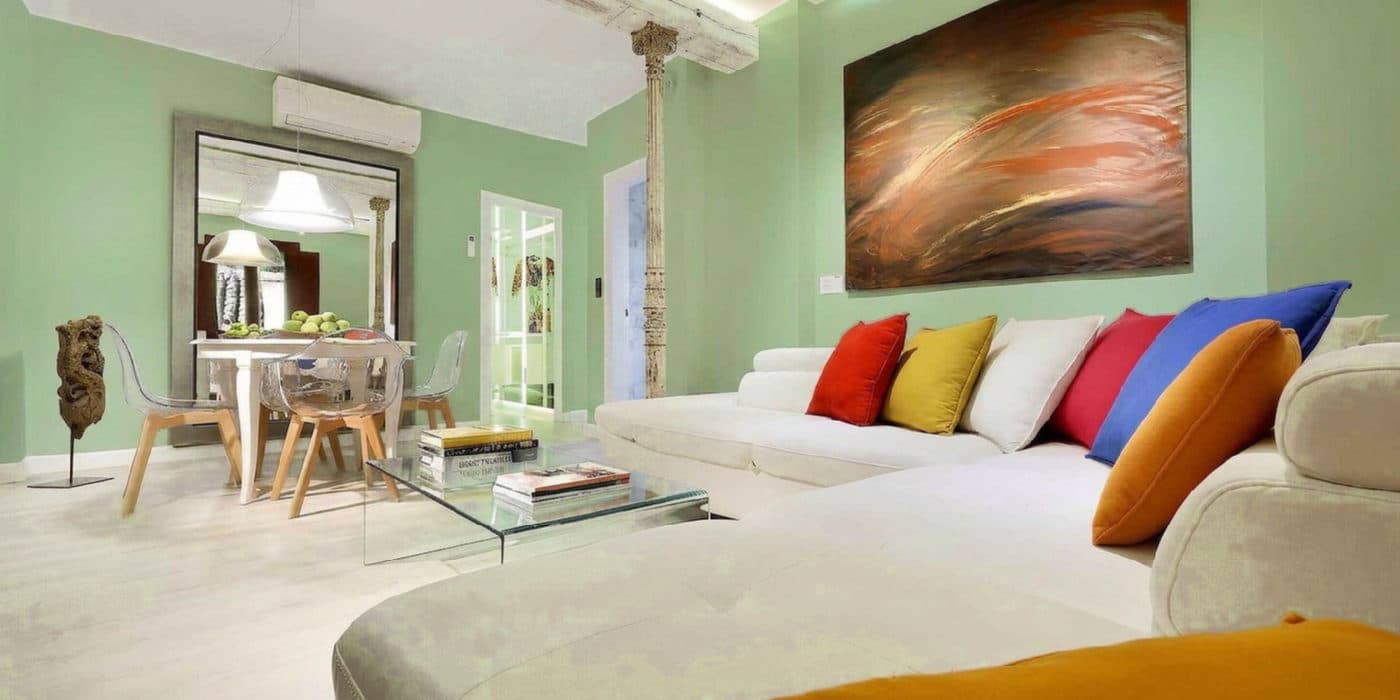
Colour direction and sheen are separate decisions. A room-photo preview can show whether sage, navy, terracotta, or another colour family works with your existing floor, furniture, trim, and daylight before you buy several finish samples. TestMyPaint lets you enter custom colour codes, browse 1,532 source-checked brand colours, and compare up to five options after signing in. Every visitor gets one free anonymous render, and the result shows the requested colour code beside a measured Delta E result. Use that evidence to remove colour directions that fight the room. The preview cannot simulate the exact eggshell or semi-gloss film, and its measurement does not guarantee perfect wall targeting. Paint can spill into nearby objects and generated details can change, so inspect the whole image for artefacts. Once the colour shortlist is small, move to physical samples of the exact products and finishes.
07
The final comparison belongs in the real room. Sheen categories are not perfectly standardized, so one manufacturer's eggshell can sit closer to another product's satin or low-lustre range than the names suggest. Buy or prepare samples from the exact product lines you may use. Apply them according to the instructions, let them dry and cure for the stated time, and view them beside fixed flooring, tile, counters, cabinets, and trim. Check morning light, evening light, and the lamps used most often. Look both straight on and along the surface, where reflections and flaws are easiest to see. A portable sample board is useful for colour, but only an inconspicuous test on the prepared wall can show how that wall's texture reads. For trim, sample a short length or separate prepared piece. Choose after the appearance, cleaning guidance, surface approval, and real-room light all point to the same answer.
08
This guide compares common finish tendencies and current public guidance from paint manufacturers. It is not a laboratory test of every eggshell and semi-gloss coating. It cannot promise that every semi-gloss paint cleans better, that every eggshell hides more, or that either finish will resist a particular stain, humidity level, or cleaning routine. Performance depends on the formulation, substrate, preparation, primer, application, film thickness, ventilation, cure time, cleaner, and use. Prices, availability, product names, and sheen ranges also vary by brand and location. Use this comparison to choose the lower-reflection wall direction or the more reflective architectural-detail direction. Then verify the exact product's label and data sheet and judge a dried sample. For cabinets, floors, exterior surfaces, wet areas, or previously failing coatings, use a product specifically approved for that surface rather than applying a general interior wall-paint rule.
Where TestMyPaint fits
TestMyPaint runs in a browser and accepts a room photo. Choose from 48 curated colours, enter a custom hex, or use the Paint brands selector, which includes 1,532 source-checked colours across eight US and Canadian manufacturer catalogues. Signed-in visitors can compare up to five options, and every result shows the requested code and a measured Delta E colour difference.
Live augmented reality is not included, UK and Australian catalogues are still in preparation, and wall targeting can still miss. Use it to narrow the shortlist, then confirm the finalist with a physical swatch.
Common questions
Neither is better everywhere. Eggshell usually suits broad interior walls because it has softer reflection and is more forgiving of small flaws. Semi-gloss commonly suits trim, doors, cabinets, and approved high-moisture or high-touch surfaces. Check the exact product and test a dried sample.
Eggshell is usually the more balanced choice for living-room, dining-room, bedroom, and hallway walls. Semi-gloss can work on a smooth wall when you deliberately want more shine or the exact coating's performance is needed, but it will make wall texture and repairs more visible.
Semi-gloss creates bright reflections that can make dents, patches, roller marks, and uneven texture stand out across a large surface. The shine can also feel visually busy in a living space. Its cleaning and moisture benefits are useful only when the exact product, surface, and room conditions support them.
Do not rely on eggshell where the chosen product is not approved for the surface, moisture, wear, or cleaning routine. Trim, doors, cabinets, and hard-working wet rooms may call for semi-gloss or another specialized coating. Follow the exact product guidance rather than the sheen name alone.
Semi-gloss is commonly offered for high-moisture areas, especially trim and doors. A manufacturer-approved washable eggshell may still suit a broad wall in some well-ventilated bathrooms. Fix leaks, check ventilation, and use only a coating approved for the actual surface and exposure.
Traditionally, yes, and manufacturers often position semi-gloss for easier cleaning. Modern eggshell paints can also be washable, so compare the exact products' stain resistance, cure time, and cleaning instructions. Higher sheen does not make a coating immune to damage.
Usually. Semi-gloss reflects more light, so dents, patches, sanding scratches, and application marks can be easier to see. Eggshell is generally more forgiving, but neither finish replaces proper filling, sanding, cleaning, and priming.
A room-photo visualizer can help you choose the colour direction, but it cannot reproduce the exact reflection and texture of a cured finish. Use TestMyPaint to narrow colours in the whole room, then compare dried eggshell and semi-gloss samples from the exact products under the room's real light.
Keep narrowing
Continue with the question closest to your room before you buy a sample.
Public product information checked 21 August 2026. Features and availability can change.
Eggshell: Benjamin Moore paint finish guide
Semi-gloss: Sherwin-Williams paint sheen guide
Benjamin Moore guide to choosing a paint finish
Sherwin-Williams room-by-room paint sheen guide
Behr guide to choosing an interior sheen
Behr interior paint sheen comparison
This comparison uses published product information, not a controlled hands-on test. Screen previews cannot replace a physical swatch in the room's real light.