01
Eggshell
Living rooms, dining rooms, bedrooms, family rooms, and hallways where a soft glow and easier cleaning matter.
Interior paint sheen comparison
Eggshell is the easier-cleaning wall finish; flat keeps reflection lowest and is more forgiving of surface flaws. The exact product and room should settle the choice.
One free render. No signup or card required.
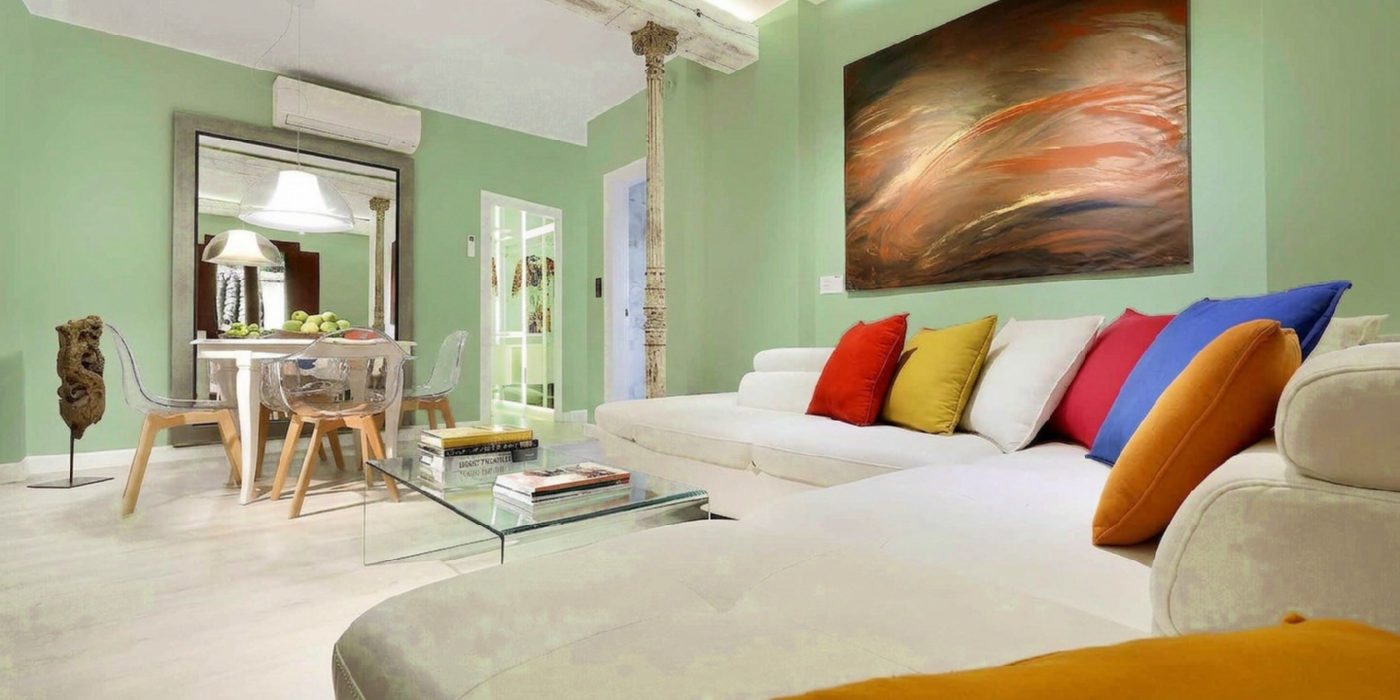

A real TestMyPaint render, measured against the requested colour code.
Choose eggshell for walls that need occasional cleaning and can carry a soft glow. Choose flat for ceilings, low-contact rooms, or uneven surfaces where minimizing reflection matters most, then verify the exact coating and a dried sample.
The better finish depends on how often the wall is touched, how smooth it is, and how much reflected light you want to see.
01
Living rooms, dining rooms, bedrooms, family rooms, and hallways where a soft glow and easier cleaning matter.
02
Ceilings, adult bedrooms, formal rooms, and low-contact walls where minimizing reflection and hiding surface variation matter most.
Facts checked 13 August 2026
Look and feel
Eggshell
Eggshell reflects more light than flat. The soft lustre can give colour more depth, but side light may reveal patches, dents, and roller texture.
Flat
Flat produces little or no visible shine. It softens highlights across seams, patches, dents, and textured walls without repairing those flaws.
Where it works
Eggshell
Eggshell sits above flat in most sheen ranges. Manufacturers commonly offer it for ordinary and higher-traffic interior walls.
Flat
Flat is the lowest-reflection finish in many interior ranges. Some current flat products are washable, so judge the coating rather than the category alone.
Cleaning
Eggshell
Manufacturers generally position eggshell as easier to clean than flat. Stain resistance, scrubbability, and approved cleaners still depend on the exact product.
Flat
Traditional flat paint can mark or burnish under repeated cleaning. Premium formulas vary, so follow the product's cure and cleaning instructions.
Application
Eggshell
Repair and prime the wall as directed, apply an even film, and keep a wet edge. Added reflection can make lap marks or uneven preparation more visible.
Flat
Prepare and prime the surface as directed, especially repaired or porous areas. Flat is visually forgiving, but it does not compensate for loose paint or failed preparation.
Choose it when
Eggshell
Choose eggshell when the wall is touched or cleaned regularly and a soft, low-lustre glow works with the room and surface condition.
Flat
Choose flat when a quiet, non-reflective surface matters more than frequent wiping, especially on ceilings or visibly uneven low-traffic walls.
Decision guide
Start with reflection, wall condition, and cleaning. Then compare dried samples from the exact product line you may buy.
01
Eggshell and flat solve different wall problems. Benjamin Moore describes flat as non-reflective and forgiving of flaws, while its eggshell guidance places a soft glow and easier cleaning above flat. Behr similarly describes flat as low-sheen and useful for low-traffic walls and ceilings, then positions eggshell for moderate-traffic rooms. Those are category directions, not universal performance grades. A premium washable flat can suit a room better than a basic eggshell, and finish names do not guarantee the same measured sheen across brands. Compare the exact products you can buy. Check intended surfaces, washability, stain and burnish resistance, primer needs, dry and recoat times, and the manufacturer's cleaning instructions before the finish name settles the decision.
02
Eggshell is usually the more practical choice for a living room, hallway, family room, or bedroom wall that collects fingerprints, scuffs, chair contact, or occasional spills. Benjamin Moore lists eggshell for high-traffic walls as well as living rooms, dining rooms, and bedrooms. Sherwin-Williams groups its Eg-Shel and satin guidance around washable finishes for areas prone to nicks and scuffs. Still, easier cleaning does not mean unlimited scrubbing. Let the coating cure for the stated time, use only approved cleaning methods, and test an inconspicuous spot first. If moisture, grease, or repeated cleaning defines the room, compare satin or a purpose-approved kitchen or bath product too. Eggshell is a middle step, not an automatic answer for every hard-working surface.
03
Flat paint reflects the least light, so it is often chosen for ceilings, low-contact rooms, and walls with visible seams, patches, dents, or texture. Benjamin Moore says its lack of reflection is more forgiving of flaws, while Sherwin-Williams recommends flat for ceilings and uneven or textured walls. This does not make damage disappear. Inspect the wall with a lamp held at a shallow angle, repair loose material, fill damage, sand transitions, remove dust, and prime as the selected paint directs. Then judge a dried test patch from several angles. Flat is a strong direction when reflected highlights are the main visual problem and the surface will not need frequent cleaning. It is a weaker fit when hands, furniture, children, or pets repeatedly mark the wall unless the exact flat product supports that use.
04
The same named colour can feel different when one surface reflects more light. Eggshell may show brighter highlights beside windows or lamps, while flat can make the wall look quieter and more uniform. TestMyPaint helps with the colour direction before sheen becomes the final decision. Upload your room, enter the colours you are considering, and compare up to five options after signing in. Each result keeps the requested code visible and reports a measured Delta E colour difference. Use the whole-room view to remove colours that clash with flooring, trim, furniture, or daylight. The preview cannot reproduce the exact reflection, texture, or cured film of eggshell or flat paint, and wall targeting can still affect nearby details. Inspect every render, then move the shortlist to physical samples.
05
Finish labels are only a starting point. Buy or order samples from the exact manufacturer, colour, product line, and sheen you may use. Apply them according to the label, then wait for the stated dry and cure time before judging colour, reflection, cleaning, or touch-up behavior. View each sample in morning daylight, afternoon side light, and the lamps used at night. Look straight at the wall and along it from the doorway, where sheen differences and surface flaws are easiest to see. A sample board helps move colour around the room, but a test patch reveals how the real wall texture changes lustre. Record the full winning specification so the decision ends with an orderable product, not just the words eggshell or flat.
06
This guide summarizes current public manufacturer guidance. It is not a laboratory test of every eggshell and flat coating. It cannot promise that every eggshell is washable, that every flat paint hides flaws equally, or that either finish will resist a specific stain, moisture level, cleaner, or application problem. Results depend on formulation, preparation, primer, film thickness, cure time, wall texture, lighting, and use. Product names and availability vary by location. Verify the technical data sheet and a dried sample from the exact coating. For cabinets, floors, shower surrounds, exteriors, or a failing substrate, use a product approved for that surface instead of applying a general interior-wall rule.
Where TestMyPaint fits
TestMyPaint runs in a browser and accepts a room photo. Choose from 48 curated colours, enter a custom hex, or use the Paint brands selector, which includes 1,532 source-checked colours across eight US and Canadian manufacturer catalogues. Signed-in visitors can compare up to five options, and every result shows the requested code and a measured Delta E colour difference.
Live augmented reality is not included, UK and Australian catalogues are still in preparation, and wall targeting can still miss. Use it to narrow the shortlist, then confirm the finalist with a physical swatch.
Common questions
Eggshell is usually better for walls that need occasional cleaning because it adds a soft lustre and manufacturers often position it above flat for durability. Flat suits low-contact or visibly uneven walls where minimizing reflection matters more. Check the exact product and a dried sample because formulations vary.
Usually. Eggshell reflects more light, so dents, patches, roller texture, and uneven preparation can become easier to see in side light. Flat is more forgiving, but it does not repair flaws. Prepare the surface and test the exact coating on the real wall.
Eggshell is often the practical choice when the living-room walls collect fingerprints, scuffs, or chair contact. Flat can suit a formal, low-contact room or an uneven wall where a non-reflective finish matters more. Let the room's use, wall condition, and exact product decide.
Flat is the common ceiling choice because its low reflection helps the surface recede and makes seams or patches less noticeable. Use a ceiling-approved product and follow its preparation guidance. Eggshell may be considered only when the exact product is approved and extra cleanability matters.
Some current flat paints are washable, but the finish name alone does not prove it. Follow the exact product's cure and cleaning instructions. Hard rubbing can mark, polish, or burnish a low-sheen surface, so test a hidden area first.
A room-photo visualizer can help you choose the colour direction, but it cannot reproduce the reflection or texture of cured eggshell and flat coatings. Use TestMyPaint to narrow colours in the whole room, then compare dried samples of the exact products under the room's real light.
Keep narrowing
Continue with the question closest to your room before you buy a sample.
Public product information checked 13 August 2026. Features and availability can change.
Eggshell: Benjamin Moore paint finish guide
Flat: Behr interior sheen guide
Sherwin-Williams paint finish guide
Sherwin-Williams guide to gloss and sheen
Behr interior paint sheen comparison
This comparison uses published product information, not a controlled hands-on test. Screen previews cannot replace a physical swatch in the room's real light.